
Local SEO is how your business shows up when someone nearby searches for what you do: on Google Maps, in regular Google results and, more and more, in AI tools like ChatGPT. This guide walks through 10 local SEO strategies that work for small businesses in Orlando in 2026, in the order we’d tackle them, with what to do and what to skip.
📚 In this guide
- How Google ranks local businesses
- The 10 strategies
- How long local SEO takes
- Common mistakes
- Local SEO FAQ
Updated November 2026 · About 11 minutes to read
Want it done for you instead? See our Orlando local SEO services. Otherwise, here’s how to do it yourself.

How Google ranks local businesses in Orlando
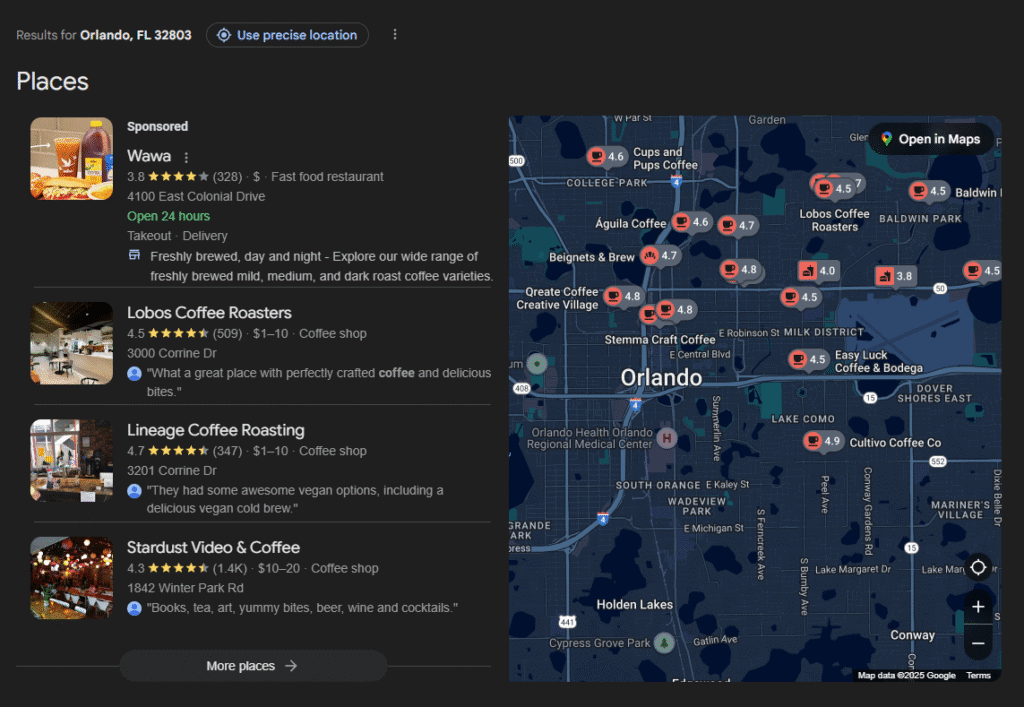
Google says local results are mainly based on three things: relevance, distance and prominence.
- Relevance: how well your profile and website match the search. If most of your work is AC repair, your profile and pages need to say AC repair clearly.
- Distance: how far you are from the person searching, or from the place they typed. A search from Lake Nona and the same search from Altamonte Springs can show completely different businesses.
- Prominence: how well known you are. Google counts your review count and rating, plus links, articles and directory listings about you from across the web.
You can’t move your shop, so most of the work goes into relevance and prominence. Every strategy below helps with one or both.
10 local SEO strategies for Orlando small businesses
Work through these in order. The first five are the foundation, and the last five build on them.
1. Complete your Google Business Profile
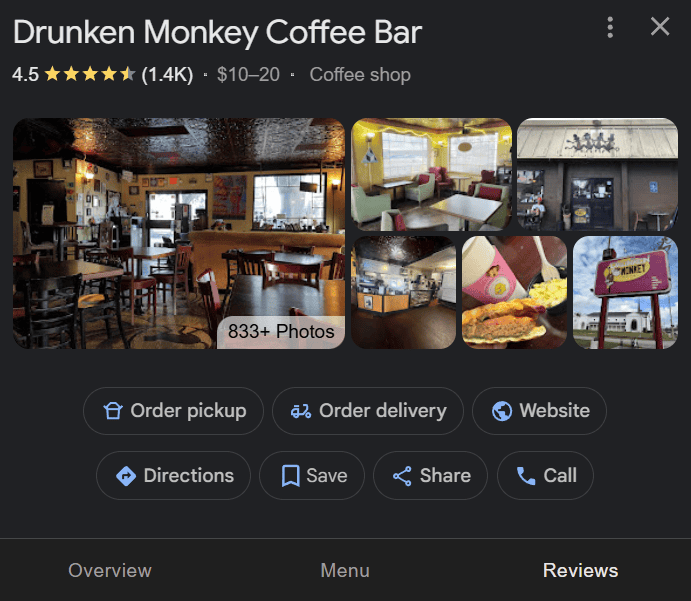
Your Google Business Profile, the listing that shows on Google Maps, is the biggest single piece of local SEO. Most owners set it up once and never touch it again. Go through every section:
- Main category. Pick the most specific category for the work you do most. If repairs are most of your calls, “Air conditioning repair service” fits better than a broad contractor category. Add a few more categories only for services you actually sell.
- Services and description. List every service. Write the description in plain words: what you do, who you do it for and the areas you cover. No keyword lists.
- Hours, phone and website. Keep them right, including holiday hours. Use a local number and link to your most relevant page, not just your homepage.
- Photos. Add real photos of your team, trucks and finished jobs around Orlando every month. Skip stock photos.
- Updates. Post every week or two: a recent job, an offer or a seasonal tip.
- Ownership. The profile should be in your name, with your agency added as a manager, never the other way around.
2. Set it up right if you go to your customers
Plumbers, pool techs, pest control, cleaners and most other home services don’t have customers come to them. Google calls these service-area businesses, and the rules are different:
- Hide your address. If you don’t serve customers at your address, Google says to remove it and list your service area instead. Leaving a home address showing breaks Google’s rules and can get your profile suspended.
- List the areas you really serve. Add the cities or ZIP codes you actually work in, like Orlando, Winter Park, Kissimmee or Sanford, not the whole state.
- Know where you’ll rank best. Your rankings are still tied to the address you verified, so you’ll show up most strongly near it. Hiding the address doesn’t change that.
- Don’t add fake locations. Extra profiles at virtual offices or a friend’s address to cover more towns are against Google’s rules and get removed. Reach farther towns with your website instead (strategy 6).
- Have a shop and a service area? You’re a hybrid business: show the address and add your service area too.
3. Pick local keywords people actually search
Use the words your customers type, not industry terms. Someone with a bug problem might search “exterminator near me,” “pest control Kissimmee” or “how to get rid of palmetto bugs.” Three free ways to find those words:
- Google autocomplete. Start typing your service and a town, and see what Google suggests.
- Google Search Console. It shows the searches already bringing people to your site.
- Your own calls. Listen to how customers describe the problem on the phone.
Then use those words naturally in page titles, headings, your profile’s services and your descriptions. One clear page per main service works better than one page trying to rank for everything. Don’t repeat the same phrase in every paragraph. Google can tell when a page is written for search engines instead of people.
4. Keep your name, address and phone identical everywhere
Google and AI tools compare your business details across the web. If your website says “Suite 200” and Yelp says “#200,” or an old phone number is still on a directory, your business looks less certain.
- Pick one exact format for your business name, address and phone, and use it everywhere.
- Start with the big listings: Google, Apple Business Connect (Apple Maps), Bing Places, Yelp, Facebook and the BBB.
- Then your industry’s sites: Angi and Thumbtack for contractors, Healthgrades for medical practices, Tripadvisor and OpenTable for restaurants.
- Then local ones: your chamber of commerce (such as the Orlando Regional Chamber) and local business groups.
- Clean up old listings after a move or a number change. Search your old phone number to find them.

5. Earn reviews and reply to every one
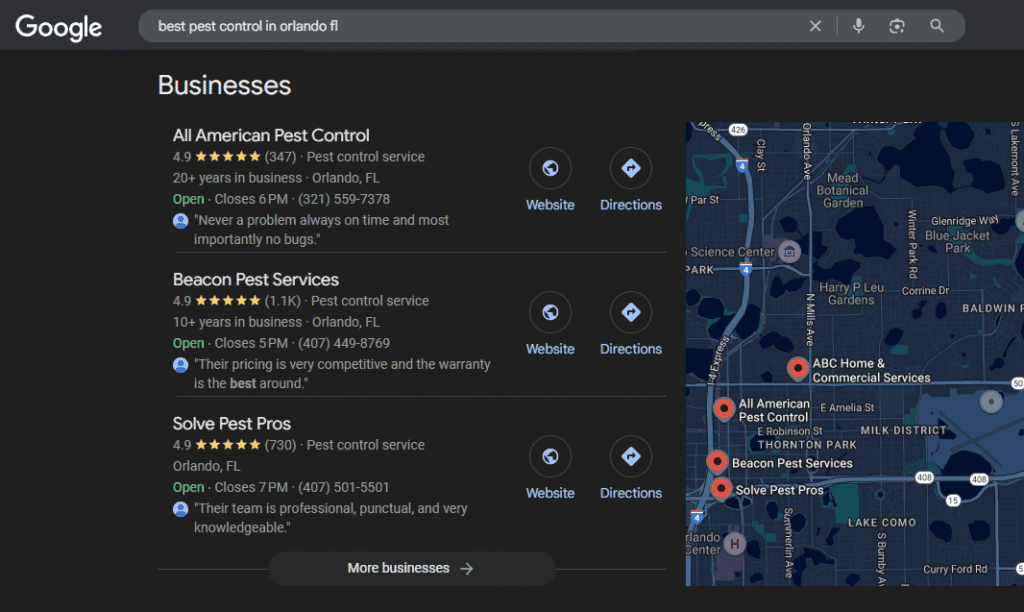
Google says review count and rating factor into local rankings, and reviews are what customers read before they call.
- Ask every happy customer right after the job, with a direct link to your Google review page. For most home services, a text gets more replies than an email.
- Make it automatic. Build the request into your invoice or job-complete message so nobody has to remember.
- Reply to every review, good and bad, within a day or two. A calm reply to a bad review shows future customers how you handle problems.
- Don’t pay for reviews or offer discounts in exchange. Google’s rules prohibit it.
- Get some on Yelp too. ChatGPT leans heavily on Yelp (see strategy 9).
This is the part most owners let slip, so we built a service around it: automatic review requests and follow-ups. For Medallion Energy, a Central Florida pool heating company, a steady review routine was part of the work behind 150% more Google reviews and over 5x more visibility in the Google Maps results. Read the case study.
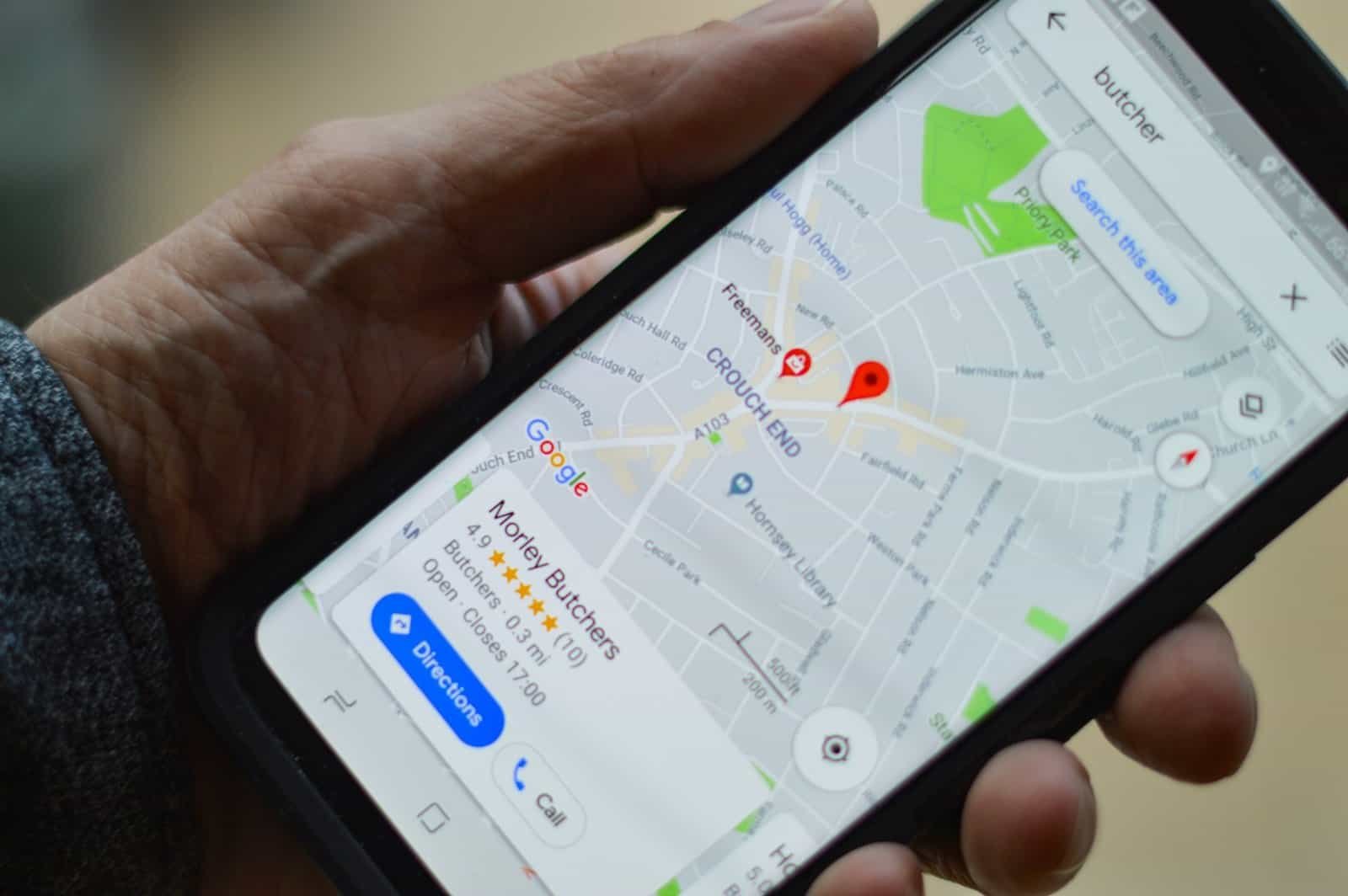
6. Write pages and posts for the areas you serve
Your website tells Google what you do and where. Three kinds of pages help most:
- Service pages. One page per main service, with prices or price ranges if you can share them, photos of real jobs and answers to the questions customers ask.
- Area pages, only if they’re truly different. A page for a town you work in should talk about real jobs and customers there. Copying a page and swapping the town name doesn’t help, and Google can treat it as spam.
- Helpful posts. Answer the questions you hear on calls, like “How long should an AC last in Orlando heat?” or “Is my roof ready for hurricane season?”
If your site needs this kind of work, it’s what our Orlando SEO service covers.

7. Add schema that matches your Google profile
Schema is code that labels your business details for search engines and AI tools. For local SEO, the one that matters is LocalBusiness, or a more specific type like Plumber or HVACBusiness. Include your name, phone, hours, website, address or service area, and links to your profiles. Make sure it matches your Google profile exactly.
Two things to know in 2026:
- It won’t get you review stars. Since 2019, Google doesn’t show stars for reviews a business marks up about itself on its own site.
- FAQ schema won’t get you a dropdown in Google. Google stopped showing FAQ results in May 2026. The markup does no harm and still describes your page clearly, but it won’t change how you look in search.
To check your code, paste your page into the free Schema Markup Validator (validator.schema.org).

8. Earn links and mentions from Orlando sources
Links, articles and listings about you all count toward prominence. A mention from the Orlando Sentinel, a local chamber or a community group carries more local weight than a random national directory. A few ways to earn them:
- Sponsor a local team, school event or charity run, and ask for a link from their site.
- Join your local chamber and get listed in its member directory.
- Partner with businesses that serve the same customers, like a pool builder and a pool service company, or a realtor and a home inspector.
- Offer expert comments to local reporters, especially around storms, heat waves and other seasonal stories.
- If you’re a certified installer or dealer, get listed on the manufacturer’s “find a dealer” page.

9. Show up in AI answers (ChatGPT and Google’s AI)
More customers now ask AI who to call. In BrightLocal’s 2026 survey, 45% of consumers had used ChatGPT or other AI tools for local recommendations, up from 6% a year earlier. The good news: AI tools mostly read the same things local SEO already builds.
- Google’s AI (AI Overviews and AI Mode) leans on your Google Business Profile. It was the most cited source in BrightLocal’s study of 1,355 businesses.
- ChatGPT leans on Yelp. In the same study, Yelp appeared in about 80% of ChatGPT’s local answers. Claim your Yelp page and fill it out.
- Bing matters again. ChatGPT’s search relies heavily on Bing, so claim Bing Places.
- Your website is what AI tools quote, so clear service pages and plain answers to common questions help.
- Don’t block AI search tools. Make sure your robots.txt doesn’t block OAI-SearchBot, the crawler ChatGPT search uses.
For the full playbook, see how to get your business recommended by ChatGPT, or our AI SEO service.

10. Track rankings by area, not from your desk
Your Maps ranking changes from neighborhood to neighborhood, so you can rank first in Downtown Orlando and not show up at all in Dr. Phillips. Searching from your office only tells you where you rank at your office. Track these instead:
- A ranking grid. Tools like Local Falcon and BrightLocal check your Maps ranking from points across your area, so you can see where you show up and where you disappear.
- Your Google profile’s performance tab: calls, direction requests and website clicks.
- Google Search Console (free): which searches bring people to your website.
- Calls and booked jobs. Use call tracking and ask every new customer how they found you. Rankings only matter if the phone rings.
- AI answers. Once a month, ask ChatGPT and Google “best [your service] in [your town]” and note who gets named.

How long local SEO takes
- Month 1: profile cleanup, listings, tracking and website fixes. Not much visible change yet.
- Months 2–3: Maps rankings often start to move, especially for less crowded searches and nearby towns.
- Months 4–6: new pages start ranking, and calls become steady enough to measure.
- Months 6–12: competitive searches start to break through, and results keep building as long as the work continues.
If you need calls right away, Google Ads can fill the gap while local SEO builds.
Common local SEO mistakes we see in Orlando
- Showing a home address on a service-area profile.
- Choosing a broad main category, or a long list of categories that don’t match the work.
- Copy-paste town pages where only the city name changes.
- Cramming the city and service name into every sentence.
- Ignoring Yelp, Apple and Bing because “nobody uses them.” AI tools do.
- Buying reviews or trading discounts for them.
- Letting an agency own your Google profile.
- Judging results by searching from your own phone.
Where to start this week
- Week 1: Fix your Google Business Profile (category, services, hours, photos), and hide your address if you’re a service-area business. Start asking every customer for a review.
- Weeks 2–4: Match your details on Apple, Bing, Yelp, Facebook and your industry’s sites. Make sure each main service has its own page.
- Every month: Add photos and updates, reply to every review, publish one helpful page and check your rankings grid.

None of these local SEO strategies are shortcuts. They work because they make your business easier for Google, AI tools and customers to understand and trust, and the results build on each other month after month.
Want help? Our Orlando local SEO service handles all of this for you, starting at $750 a month. Or run a free site check first. It’s automated, so there’s no call and no sales pitch.
Local SEO FAQ
How much does local SEO cost for a small business in Orlando?
Most small businesses pay about $500 to $2,000 a month for local SEO. At AvantFlow, local SEO starts at $750 a month. See our full Orlando SEO pricing guide.
Does local SEO still work in 2026?
Yes. Google still shows Maps results for most local searches, and the same work (a complete profile, matching listings, reviews and clear service pages) is also what AI tools like ChatGPT use when they recommend businesses.
Can I do local SEO myself?
Much of it, yes. You can keep your Google profile complete, ask for reviews, fix your listings and add photos. Writing pages that rank, technical fixes, tracking and keeping it up every week is where most owners run out of time.
Can ChatGPT do local SEO for me?
It can help you draft descriptions, review replies and page outlines, but it can’t verify your profile, earn reviews or fix your listings. Check anything it writes, because it gets details wrong. ChatGPT is also now a place customers find businesses, which is a reason to do local SEO well.
Do I need a public address to rank on Google Maps?
No. Service-area businesses can rank without showing their address. You verify with a real address, hide it, and list the areas you serve. You’ll usually rank best near the address you verified.
Sources
- Google: Tips to improve your local ranking (relevance, distance, prominence)
- Google: Manage your service area
- Google Search Central: Making review rich results more helpful (2019)
- Search Engine Journal: Google drops FAQ rich results from search (May 2026)
- BrightLocal: Where AI search gets local business information
- BrightLocal: Local Consumer Review Survey 2026

Chris is a seasoned digital strategist and growth marketing expert with over a decade of experience guiding businesses through data-driven marketing transformations. With a passion for continuous testing and a commitment to customer-centric strategies, Chris helps companies build a robust online presence and achieve measurable, scalable growth.